.svg)
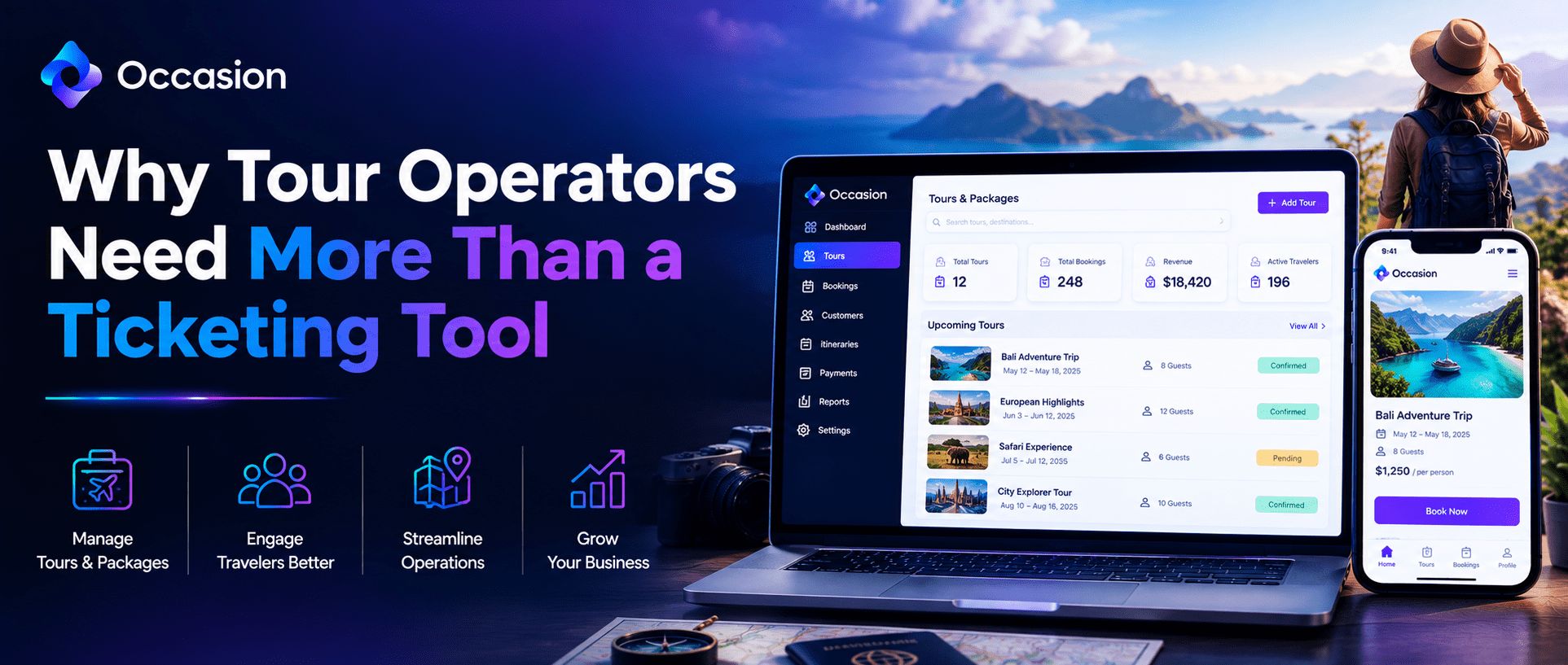
Why Tour Operators Need More Than a Ticketing Tool
October 6, 2026

Written by
Aksh G
.svg)
Tour booking software does the work a ticketing tool skips, from waitlists and cart recovery to account credits, check-in, and season reporting.
Tour booking software does more than sell a ticket. It fills empty seats, chases abandoned carts, checks guests in, and tracks where the money went. A ticketing tool stops at the transaction. Everything after the sale, which is where most tour revenue is won or lost, gets left to staff.
Built for businesses running classes, workshops, and events, Occasion books around three and a half million customers a year across eight thousand sellers. Tour companies sit among them, including trolley tours and historic walking tours. Our platform covers the calendar, payments, rosters, and reporting in one place.
What Tour Booking Software Does Beyond Ticketing
A ticketing tool handles one moment well. Somebody picks a time, pays, and gets a confirmation. Everything around that moment goes unmanaged. Sold-out slots lose people who would have waited. Half-finished bookings vanish. Guests arrive with a printed email, and nobody knows who checked in.
Why Multi-Channel Booking Suits Tour Desks
Tours still sell heavily by phone and at the desk. A hotel concierge calls. A family walks up an hour before departure. Online, phone, and in-person bookings all need to land in one calendar. Double booking conflict management catches clashes before departure.
Why Seat Filling Matters More than Seat Selling
A tour costs the same whether six people board or sixteen. The guide gets paid. The vehicle runs. Fixed costs make every empty seat expensive. Selling is only half the job. Recovering seats that nearly sold, or opened up late, is where margin improves.
How Waitlists Recover Lost Seats
A sold-out morning tour usually loses one or two bookings by the night before. Without a waitlist, those seats just stay empty. People can subscribe to a full departure and get notified the moment space opens. Cart recovery emails bring back half-finished bookings too.
How Payments and Refunds Affect Cash Flow
Weather can cancel tours, and buses can break down. Refunds send money out of the business, while account credits keep that value inside with an expiry date. Coupons can help fill quiet midweek departures. The booking fee is 2% and can be passed to guests. The system also supports Square and Stripe payments, online and in-person coupons, and digital gift cards.
What Reporting Tour Operators Actually Need
Season planning needs more than sales totals. Transaction reports show which departures earn the most. Tax reports support accounting on a cash or accrual basis. Trend data shows which months fill first. Easy exports also matter because operators need access to their business data. These reports help operators understand performance, plan ahead, and make informed decisions.
Why Switching Platforms Feels Risky
Switching platforms can feel risky when years of customer records are stored in the old system. Losing that information is often the biggest concern. A dedicated migration partner can move calendars, bookings, customers, and credits to the new platform. This makes the change easier and reduces disruption. The setup fee is also fully refundable.
Why Tour Operators Choose Occasion
Tour operators have switched to Occasion from platforms such as FareHarbor, Bookeo, PeakPro, RezClick, and Eventbrite. Support is available from real people through chat, email, or phone seven days a week. There are no call centers in between. Occasion also offers digital check-in from any phone, without requiring guests or staff to log in.
Conclusion
Tour booking software should continue helping after a booking is made. Waitlists can help refill open seats, while account credits can keep money within the business. Reports can also help operators plan the next season. Basic ticketing tools may not offer these features. Occasion supports migration and training before the first departure.
FAQ
Can the booking fee be passed to guests?
Yes. The fee is two percent per booking, and each operator decides whether to absorb it. About 63% of Occasion merchants pass it on to customers.
What happens to existing data when switching?
A dedicated partner imports the calendar, bookings, customers, and credits. Staff also receive one-to-one training. Data stays exportable afterward, so nothing gets locked inside the system.
Keep reading


Occasion’s mission is to empower those who build happier communities.